DeepL Voice-to-Voice brings real-time translation to live work
DeepL Voice-to-Voice is DeepL’s next step in real-time voice-to-voice translations for meetings, in-person conversations, and enterprise workflows. In 2026, DeepL Voice brings real-time translation to Teams, Zoom, mobile, web, and the DeepL Voice API, so people can speak naturally and follow a conversation in one shared language. If your team works across countries, this matters a lot. You spend less time repeating yourself, less time waiting for summaries, and more time actually deciding things.
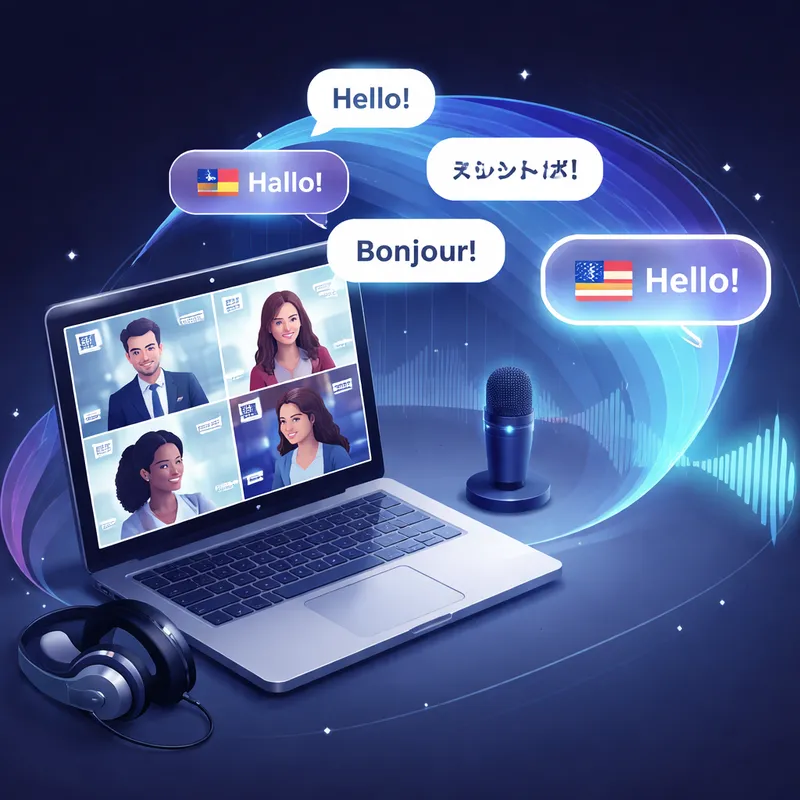
The bigger idea is simple. Instead of asking everyone to switch to one common language, DeepL wants each person to speak in their own language and still be understood in real time. That starts with translated captions today and moves toward full voice-to-voice audio in live conversations.
What DeepL Voice includes right now
DeepL has split the product into three main parts, which makes sense because not every business conversation happens in the same place.
DeepL Voice for Meetings
This is built for Microsoft Teams and Zoom Meetings. It already supports live translated captions and is designed for inclusive virtual meetings where participants can follow along regardless of language. DeepL says voice-to-voice support for meetings is coming soon.
For many companies, this is the easiest entry point. You keep using the meeting tools your team already knows, but add real-time translation on top.
DeepL Voice for Conversations
This is for face-to-face communication. Think customer service desks, hotel check-in, warehouse floor conversations, training sessions, healthcare intake, field service visits, or partner meetings. It runs on iOS, Android, and the web, and DeepL positions it as fast and private with on-device speech translation.
It also supports one-on-one and group conversations, which is useful when one person is explaining a process to several people at once.
DeepL Voice API
The DeepL Voice API is for companies that want to build translation into their own systems. A contact center is the obvious example. An agent speaks one language, the customer speaks another, and the system translates live while also helping with transcripts, routing, or notes.
If you run multilingual support, this is the part worth watching closely.
Why DeepL Voice-to-Voice feels different
A lot of translation tools can turn speech into text. The hard part is making that translation usable in live conversation.
DeepL’s AI Labs page explains the problem well. Real-time translation depends on context that often arrives a few words later. If a system waits for the full sentence, latency goes up. If it keeps rewriting the result every second, you get flickering text. That makes the conversation feel unstable and awkward.
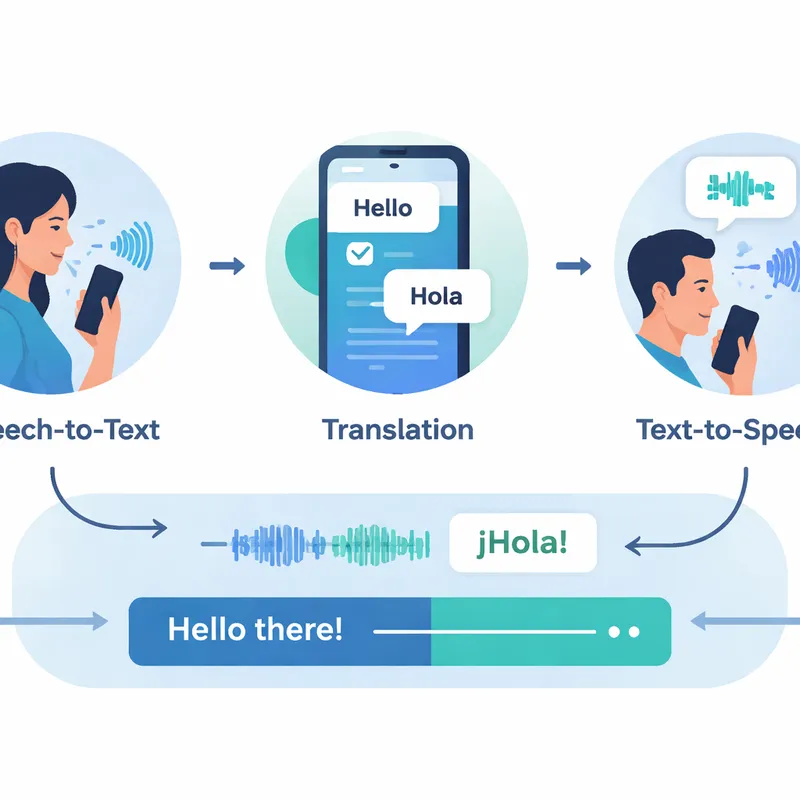
DeepL says it has focused on three layers:
- Strong speech-to-text accuracy
- Stable real-time translation with low latency
- Real-time text-to-speech to complete the voice-to-voice experience
That middle layer is the key. If translated text keeps changing, natural audio output becomes much harder. DeepL’s claim is that it has engineered a stable text stream that makes real-time voice output practical.
I think this is the most important part of the story. Good speech synthesis is nice, but smooth conversations depend even more on timing and stability.
Real-time AI translation for Teams, Zoom, and meetings
If your company already lives in Teams or Zoom, DeepL Voice for Meetings is the most practical use case.
According to DeepL, the product offers:
- Live captions in Microsoft Teams and Zoom Meetings
- Support across 100+ caption languages on the broader Voice page
- Voice-to-voice translation for meetings coming soon
- Access on web, desktop, and mobile with a DeepL Voice for Meetings subscription
- Enterprise-grade security and privacy controls
DeepL also cites independent blind evaluations by Slator, where 96% of linguists preferred DeepL Voice over native translation solutions from Google, Microsoft, and Zoom. DeepL reported quality scores of 96.4/100 for Zoom and 96.3/100 for Microsoft Teams.
Those are strong claims, but the real test for you is simpler. Can your team follow a fast meeting with technical words, accents, and interruptions? That is where the product either earns trust or gets ignored.
There is also a concrete business proof point. DeepL says Aramark and Avendra International cut international meeting times by 50% with DeepL Voice.
DeepL Voice for Conversations and the DeepL Voice app
This is where the product gets more practical for frontline teams. DeepL Voice for Conversations is made for real people standing in front of each other, trying to solve a problem quickly.
Common examples include:
- A receptionist helping a guest check in
- A logistics supervisor explaining a safety step
- A field technician confirming a repair detail
- A trainer coaching a multilingual group
- A support rep helping a customer on a mobile device
DeepL says the Conversations product is available on iOS, Android, and the web. So if you are searching for the DeepL Voice app, this is the part you want.
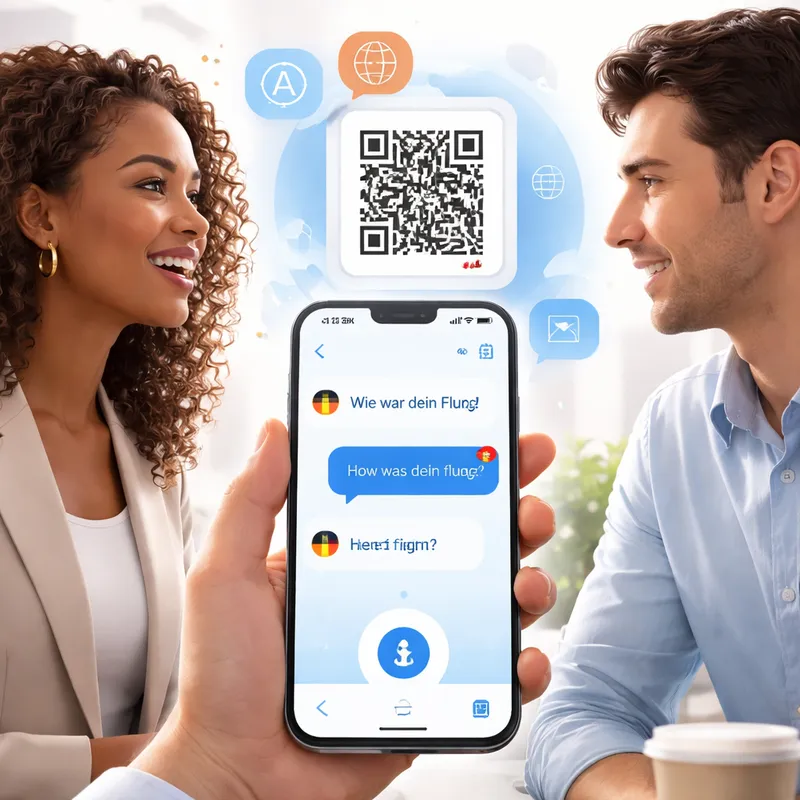
One useful addition is group conversations with multi-device access. Participants can join via QR code, which could make workshops and training sessions much easier than passing one phone around the room.
The practical upside is speed. The practical risk is environment. Noise, bad microphones, speaker overlap, and fast jargon-heavy speech can still reduce quality. If you plan a pilot, test it in your hardest location first, not your quietest one.
DeepL Voice API for contact centers and enterprise workflows
The DeepL Voice API matters because not every business wants another standalone tool. Some want translation inside the systems they already use.
DeepL positions the API for:
- Contact centers
- BPO workflows
- Customer service systems
- Sales calls
- Internal voice tools
- Live interpretation inside enterprise software
The pitch is straightforward. Hire based on expertise, not only language coverage. Expand your talent pool. Reduce the need to build separate language-specific queues for every workflow.
In practice, a company could capture incoming audio, translate it for the agent, translate the response back to the caller, and save translated notes or transcripts for QA. That will not replace bilingual experts in every case, especially in regulated or high-risk situations, but it can help monolingual teams handle more routine interactions.
Accuracy, terminology, and spoken terms
DeepL is clearly aiming at business conversations, not casual travel phrases. That is why terminology support matters so much.
DeepL says businesses can customize Voice with:
- Industry terms
- Quality optimisation
- Spoken Terms for company names, product names, acronyms, and special terminology
- Translation glossaries integrated into DeepL Voice
This is more important than it sounds. If your product name, drug name, internal acronym, or legal phrase gets mistranslated, trust drops fast. A glossary built before rollout can save a lot of pain.
DeepL also says its speech-to-text models show market-leading Word Error Rate on internal benchmarks against Amazon Transcript and Microsoft Azure AI Speech, using a proprietary test set focused on business use cases. That is a promising signal, though it is still an internal benchmark rather than a universal public standard.
Security, privacy, and compliance
If you are evaluating DeepL live translation for work, security is not a side note. It is the checklist.
DeepL states that:
- It never uses your data to train its language models
- It has ISO/IEC 27001:2022 certification
- It has SOC 2 Type 2 assurance
- It is GDPR and HIPAA compliant
- It supports SSO with OIDC and SAML
- It offers MFA for non-SSO users
- It includes role-based permissions, audit logs, and network access restrictions
For data handling, DeepL says Voice for Meetings processes transcription and translation temporarily in memory and deletes it after the call ends. It says data is encrypted in transit and persists only on participants’ local devices. For Voice for Conversations, DeepL says processing happens temporarily on the local device and data is deleted when no longer visible on screen.
That is a strong privacy position, especially for companies that worry about recordings becoming training data later.
DeepL Voice pricing, access, and availability
DeepL Voice pricing appears to be customized based on usage, product type, and volume. For some products, DeepL directs buyers to contact sales. At the same time, reports around the 2026 launch say smaller teams can purchase some DeepL Voice offerings online and start with a free trial.
So if you are searching for Deepl Voice free, the better answer is this: there may be trial access or limited direct purchase paths, but this is mainly an enterprise product, not a permanently free consumer tool.
Availability also varies by product:
- DeepL Voice for Conversations is generally available
- Group Conversations availability was announced for April 30
- Spoken terms customization was announced for May 7
- Voice for Meetings voice-to-voice entered early access in June
- DeepL Voice API voice-to-voice access is through an early access program
If you need a specific language pair or deployment timeline, get that confirmed in writing before rollout.

Best use cases for DeepL Voice in 2026
DeepL Voice works best when your team needs speed, clarity, and repeatable business communication.
The strongest use cases are:
- Global project meetings in Teams or Zoom
- Cross-border training and workshops
- Customer-facing frontline conversations
- Contact centers serving multiple languages
- Sales and support teams that need wider language coverage
- Internal operations where skill matters more than fluency
It is less ideal when the stakes are extremely high and a single word error could create legal, clinical, or financial risk. In those cases, human review or bilingual confirmation still matters.
FAQ
Can DeepL translate in real time?
Yes. DeepL Voice supports real-time translation across Voice for Meetings, Voice for Conversations, and the DeepL Voice API. You choose the languages and start translating live speech for meetings, face-to-face interactions, or embedded enterprise workflows.
What is the best translator for active conversations?
The best translator for active conversations depends on your setting. If you need enterprise-grade, live business communication, DeepL Voice for Conversations is a strong option because it is designed for real-time, face-to-face exchanges on mobile and web, with privacy and terminology controls. If your environment is noisy or highly regulated, you should still pilot it first and keep human backup for critical moments.
Is DeepL owned by China?
No. DeepL is a German AI research company. It is known for DeepL Translator, DeepL Voice, and other language AI tools for businesses and individuals.
Does DeepL have a conversation mode?
Yes. DeepL Voice for Conversations is DeepL’s conversation mode for businesses. It lets people communicate face-to-face in different languages using mobile devices or the web, with secure real-time translation.
Does DeepL Voice work with Microsoft Teams and Zoom?
Yes. DeepL Voice for Meetings works with Microsoft Teams and Zoom Meetings. DeepL says a DeepL Voice for Meetings subscription is required, and the product is available on web, desktop, and mobile.
Is DeepL Voice secure for business use?
DeepL says yes. It states that it does not use customer data to train models, encrypts data in transit, offers enterprise access controls, and supports compliance standards including ISO/IEC 27001:2022, SOC 2 Type 2, GDPR, and HIPAA.
Final thoughts
DeepL Voice-to-Voice is not just another speech demo. It is an attempt to make live multilingual work feel normal. That is a bigger challenge than it sounds.
Right now, the most mature value is in DeepL Voice for Meetings, DeepL Voice for Conversations, and the DeepL Voice API. Full voice-to-voice translation is still rolling out, but the product direction is clear. DeepL wants live conversations to feel like one shared language instead of a chain of captions, pauses, and corrections.
If your team works across borders every day, this is one of the most interesting translation products to watch in 2026.

