Apple Hits Record 30% Recycled Content Across All Products in 2025
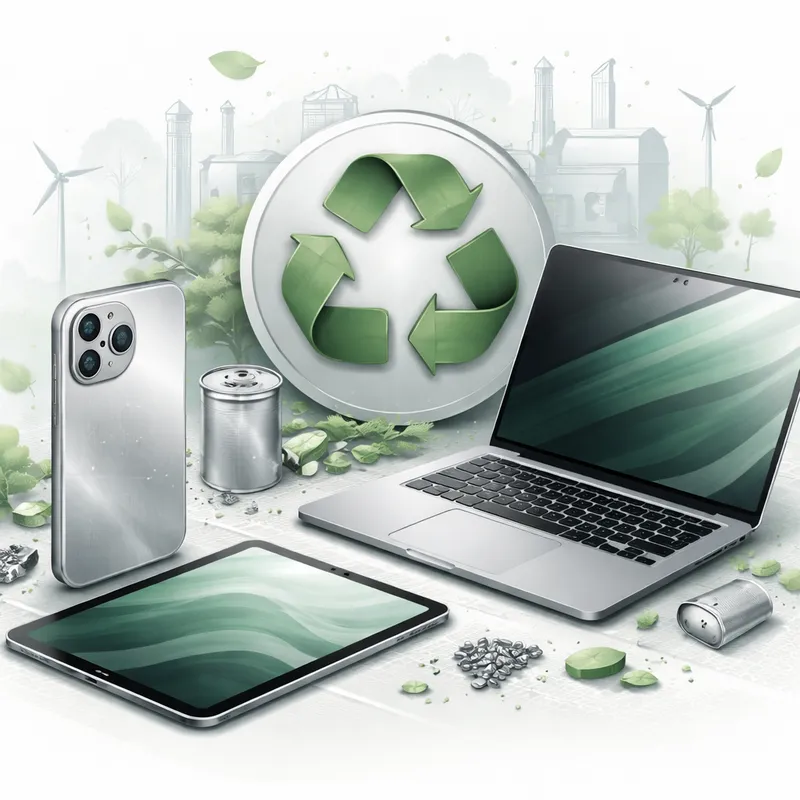
Apple says 30% of material across products shipped in 2025 came from recycled content. That makes this one of the clearest Project 2030 updates yet. If you have been tracking Apple sustainability news, this is the big headline: Apple hits record 30% recycled content across all products in 2025, while pushing toward carbon neutrality by 2030.
This matters because recycled material lowers the need for newly mined resources, cuts waste, and can shrink the carbon footprint of Apple products over time. It also shows that Apple is trying to move beyond one-off green claims and into system-level changes across batteries, magnets, boards, packaging, energy, water, and recycling.
Why the 30% recycled materials milestone matters
A 30% recycled-material average across all shipped products is not a small tweak. It means Apple is changing how it sources core materials at scale. When a company as large as Apple moves even a few percentage points, the effect ripples through suppliers, recyclers, and manufacturing partners.
The milestone also fits into Apple 2030, the company’s plan to become carbon neutral across its entire footprint by the end of the decade. That includes products, supply chain, and operations.
For you as a reader or buyer, the practical takeaway is simple: sustainability at this level is less about a single iPhone or Mac and more about how the whole production machine works. Apple is saying the machine is starting to change.
Where Apple reached 100% recycled materials
The most interesting part of the update is not just the 30% average. It is where Apple says it reached 100% recycled inputs in specific components:
- 100% recycled cobalt in batteries designed by Apple
- 100% recycled rare earth elements in magnets
- 100% recycled gold plating in Apple-designed printed circuit boards
- 100% recycled tin soldering in Apple-designed printed circuit boards
These details matter because they point to the hard-to-replace materials inside electronics. Batteries, magnets, and circuit boards are not surface-level parts. They sit at the center of how devices work.
If Apple can maintain these standards at scale, it may push other hardware makers to do the same. That is often how change spreads in consumer tech.

Packaging milestone: Apple removes plastic from packaging
Apple also said it completed its pledge to remove plastic from packaging by moving to 100% fiber-based packaging. According to the company, this shift helped avoid more than 15,000 metric tons of plastic over the past five years, or roughly 500 million plastic water bottles.
That is one of the more visible changes for customers. You may never see recycled cobalt inside a battery, but you do see the box.
Apple says its packaging is designed to be recyclable at home and that it replaced plastic items like trays and screen protectors with recycled or responsibly sourced paper. That does not solve every packaging complaint, especially from people who want more reusable shipping designs, but it is still a meaningful reduction in single-use plastic.
Recycling tech: Cora, Daisy, and A.R.I.S.
This is where the story gets more concrete. Apple is not only using more recycled content. It is also building tools to recover more material from old electronics.
Apple highlighted:
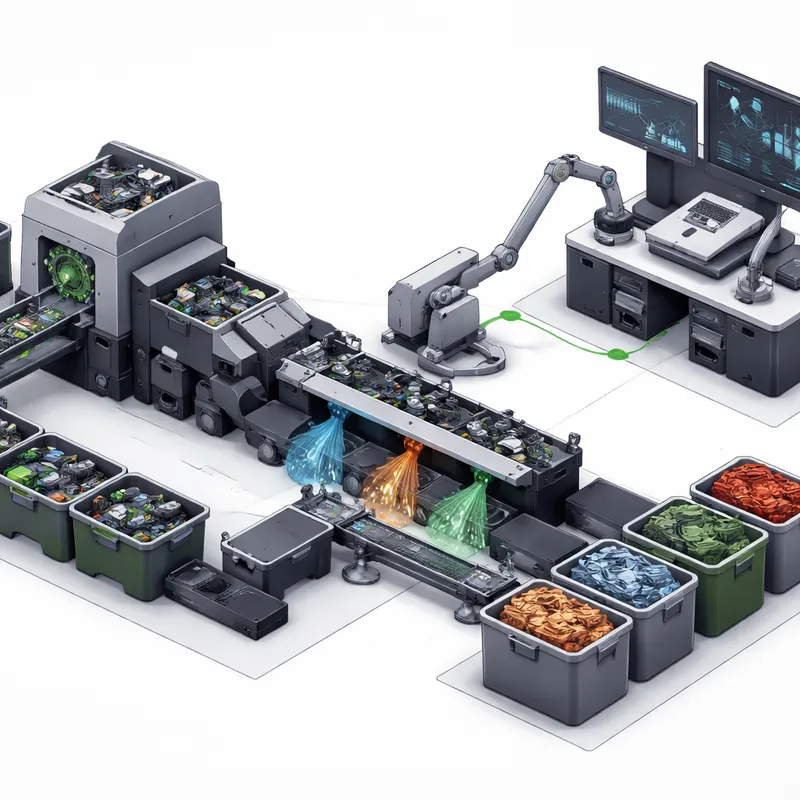
- Cora, a next-generation recycling line at its Advanced Recovery Center in California
- A.R.I.S., a machine-learning system running on Mac mini to classify and sort electronic scrap
- Daisy, Apple’s better-known device disassembly system, which continues to support material recovery
Cora uses precision shredding and advanced sensors to recover material at rates Apple says are significantly above industry baselines. A.R.I.S. helps recyclers identify and sort scrap more accurately.
In plain English, Apple is trying to improve the back end of the electronics cycle. That matters because recycled content targets only work if companies can actually recover useful material from products at the end of life.
Renewable energy and supply-chain progress in 2025
Apple tied the recycled-content update to broader environmental progress in 2025.
Here are the main numbers:
- Direct suppliers procured more than 20 gigawatts of renewable energy in 2025
- That generated more than 38 million megawatt-hours of electricity
- Apple says that is enough to power more than 3.4 million U.S. households for a year
- Apple’s own offices, retail stores, and data centers added 1.8 gigawatts of renewable energy
- Apple says its operations run on 100% renewable electricity
Another notable point from reporting around the Environmental Progress Report is that Apple said its 2025 greenhouse gas emissions were more than 60% below 2015 levels.
This is important context. Recycled material is one lever. Clean electricity is another. If you want to understand whether Project 2030 is credible, you have to look at both.
Water and waste: the less flashy part of sustainability
Water and waste usually get less attention than carbon, but they matter just as much in manufacturing.
Apple reported that in 2025:
- Apple and its suppliers saved 17 billion gallons of fresh water
- The company replenished 800 million gallons of water
- Contracted water projects replenished more than half the water withdrawn for global offices, data centers, and retail stores
- All eight Apple-owned data centers are certified to the Alliance for Water Stewardship standard
- Apple reached a 75% waste diversion rate in 2025
- More than 600,000 metric tons of waste were diverted from landfills across the supply chain
- 400 supplier facilities participated in waste diversion efforts
Apple also said all products continue to ship from final assembly sites that maintain zero waste to landfill operations.
One small detail I liked here: Apple Fifth Avenue became the first retail store in the company to earn TRUE Zero Waste Certification, which requires diverting more than 90% of waste from landfills. That makes the story feel less abstract.
MacBook Neo shows what Apple wants future products to look like
Apple used the MacBook Neo as its showcase example for where this is heading.
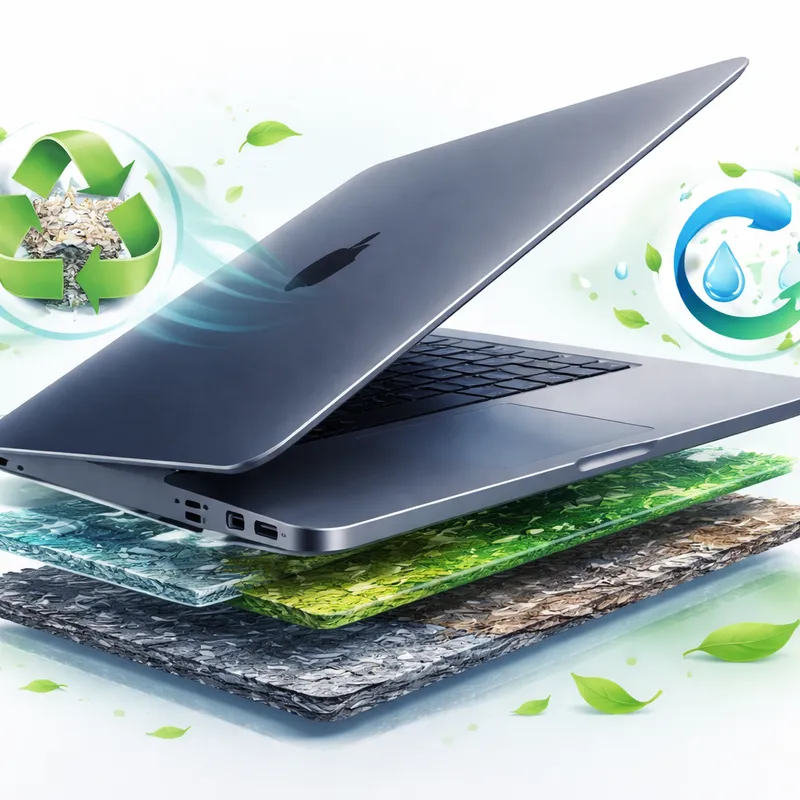
According to Apple, the MacBook Neo launched in 2026 as its lowest-carbon MacBook and includes:
- 60% recycled content overall
- 100% recycled cobalt in the battery
- 100% recycled rare earth elements in magnets
- An enclosure process that uses half the raw material of traditional machining
- A new anodization method with a 70% water-reuse rate in a closed-loop system
That is useful because big percentage claims can feel distant. A real product makes the strategy easier to understand. Apple seems to be saying that the future of its lineup will combine recycled inputs, lower-impact manufacturing, and cleaner energy all at once.
What critics still get right
Not everyone is impressed, and some of the pushback is fair.
Public comments around the news raised concerns about user repairability, packaging reusability, mining impacts, and labor issues in the supply chain. Those comments do not cancel the recycled-material milestone, but they do highlight a real point: sustainability is bigger than recycled content.
If a device uses more recycled material but remains hard to repair, that is still a problem. If packaging uses less plastic but cannot be reused in shipping or returns, some people will still see room for improvement.
So the balanced view is this: Apple’s progress looks real, especially on recycled inputs and packaging. But the company still has to prove that sustainability improvements extend across product lifespan, repair access, and sourcing transparency.
Earth Day 2026 recycling offer
Apple also tied the announcement to an Earth Day promotion. From April 16 to May 16, 2026, customers who recycle an eligible Apple product at participating Apple Stores can get 10% off Apple AirPods or accessories.
Eligible devices are screened and then routed to Apple’s recovery systems, including Daisy and Cora.
This is obviously a marketing move too, but it also gives people a simple reason to return unused hardware instead of leaving it in a drawer.
What this means for Apple Project 2030
The headline is strong: iPhone maker Apple said it has hit a record sustainability milestone, and 30% of materials in its products are now recycled. But the bigger story is that Apple seems to be connecting every piece of the chain.
Project 2030 is no longer just a carbon-neutral promise on a slide. In 2026, you can now point to specific signs of progress:
- higher recycled content across Apple products
- 100% recycled inputs in some core components
- plastic-free fiber-based packaging
- more renewable energy in the supply chain
- measurable water savings and replenishment
- stronger end-of-life recovery systems
- zero-waste improvements across facilities and suppliers
That does not mean the job is done. It means the company has moved from broad goals to trackable milestones.
If Apple keeps raising recycled content while improving repair, recovery, and supplier accountability, Project 2030 will look much more believable. If progress stalls, people will notice just as quickly.
FAQ
What does Apple’s 30% recycled content milestone mean?
It means Apple says 30% of the material across all products it shipped in 2025 came from recycled sources. It is the company’s highest reported recycled-material level so far.
Is Apple really using 100% recycled materials in some parts?
Yes, according to Apple. The company says it now uses 100% recycled cobalt in Apple-designed batteries, 100% recycled rare earth elements in magnets, and 100% recycled gold plating and tin soldering in Apple-designed printed circuit boards.
How does this connect to Apple 2030?
Apple 2030 is the company’s goal to become carbon neutral across its full footprint by the end of the decade. More recycled material can reduce dependence on newly mined resources and lower emissions tied to manufacturing.
Did Apple remove plastic from packaging?
Apple says it completed its plan to remove plastic from packaging by switching to 100% fiber-based packaging. The company also says the packaging is recyclable at home.
What is Cora in Apple recycling?
Cora is Apple’s new electronics recycling line at its Advanced Recovery Center in California. It uses precision shredding and sensors to recover more material from electronic waste.
What is A.R.I.S.?
A.R.I.S. is a machine-learning system that helps classify and sort electronic scrap. Apple says it runs on Mac mini and is being piloted with recycling partners.
What is the most sustainable Apple product mentioned in this update?
Apple pointed to the MacBook Neo as its lowest-carbon MacBook so far. It reportedly uses 60% recycled content overall and includes major manufacturing changes that reduce raw material use and water use.
Is Apple’s sustainability progress enough?
It is meaningful progress, but not the whole picture. Recycled content, clean energy, and better recycling systems matter. At the same time, concerns about repairability, reuse, mining, and supply-chain labor still matter too.
Final takeaway
Apple announces record recycled materials in 2025, and the 30% milestone gives Project 2030 real momentum. The company is showing progress in materials, packaging, clean energy, water, and waste. That said, the next phase will matter even more. You should expect Apple to keep proving that these gains show up not only in reports, but in products that last longer, recover more material, and create less waste from start to finish.

