AI Readiness and disaster recovery are drifting apart
AI readiness is now part of almost every IT roadmap in 2026. But disaster recovery, test discipline, and real recovery readiness are not keeping pace. That is the problem. Many teams believe they are ready for AI failures, especially with agentic AI entering business workflows, yet the available survey data suggests confidence is running ahead of validation.
A recent survey sponsored by Keepit and conducted by Foundry found that 94% of respondents said they were confident their current disaster recovery plan covers scenarios involving agentic AI systems. On the surface, that sounds reassuring. But the same research also shows a much messier reality: 52% still have doubts about whether their recovery plans truly cover agentic AI scenarios, and only 32% conduct monthly disaster recovery testing.
That gap matters because backup is not the same thing as recovery. A copy of your data is helpful. A tested process to restore identities, SaaS access, workflows, and decision-making paths under pressure is what actually saves your business.

What the latest 2026 survey data actually says
The strongest signal from the Keepit and Foundry survey is not just that organizations care about AI. It is that they may be overestimating their ability to recover when AI-linked systems fail.
Here are the key findings cited across Business Wire pickup coverage and BetaNews:
- 94% say they are confident their disaster recovery plan covers agentic AI systems
- 52% say they still have doubts about whether their recovery plans cover agentic AI scenarios
- 33% of IT and security leaders say they have only partial control over the use of agentic AI in their organizations
- 56% say protecting SaaS data and disaster recovery is a high priority when implementing AI solutions
- 41% say accelerated AI adoption has significantly changed their disaster recovery planning approach
- Only 32% say they run monthly DR testing
The survey covered 301 IT decision-makers across Australia, France, Germany, New Zealand, the United Kingdom, and the United States. Fieldwork ran from November 19 to December 15, 2025.
If you work in IT, this pattern probably feels familiar. Teams often say, "We have backups, we have a plan, we are covered." But when you ask who owns recovery, what gets restored first, how SaaS permissions come back online, and whether anyone has tested the process under realistic conditions, the room gets quiet.
Why confidence is not the same as recovery readiness
This is the core of the AI readiness vs reality story. Confidence is cheap. Recovery readiness is proven.
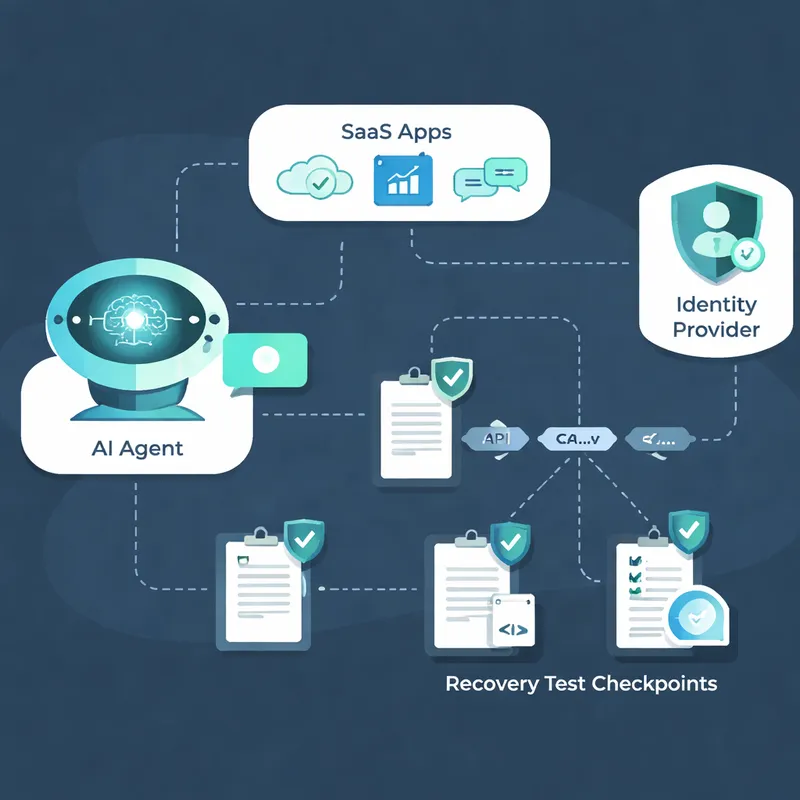
A disaster recovery plan can look complete in a slide deck and still fail during a live event. That happens because AI systems create more dependencies than many teams account for. An AI workflow may rely on:
- SaaS applications
- identity and access systems
- APIs
- cloud storage
- automation tools
- logs and monitoring
- human approvals for exception handling
If one part fails, the rest may not stop neatly. They can fail in a chain.
That is especially true with agentic AI, where software can act with less direct human oversight. A bad decision, broken identity token, deleted connector, or unavailable SaaS tenant can spread impact faster than a traditional app outage.
This is why recovery testing matters so much. You are not just testing whether data exists. You are testing whether your business can function again.
The hidden problem: identity recovery is tested far less often
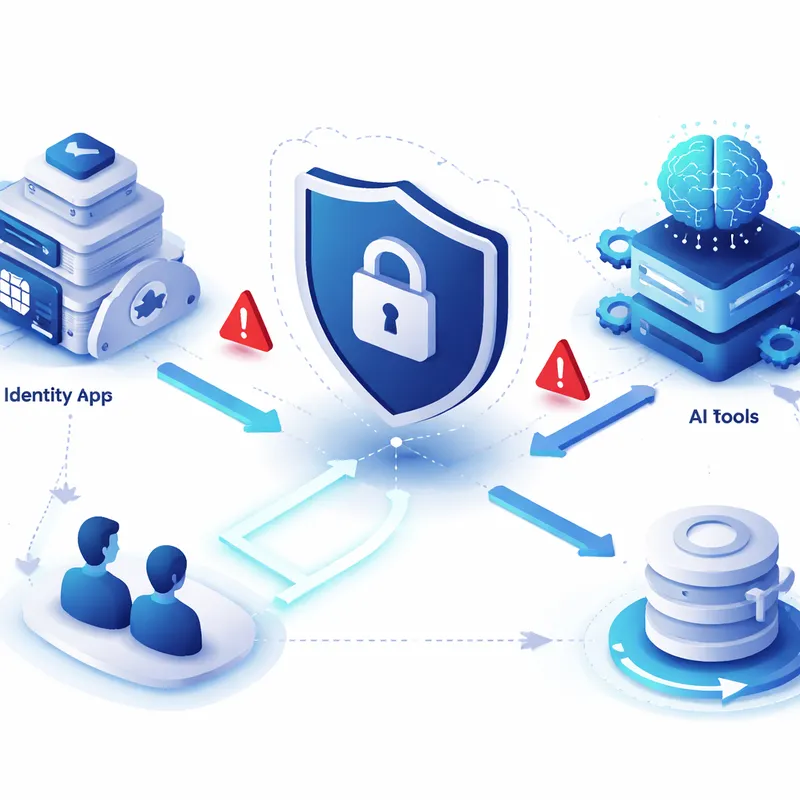
One of the most important details in the research is also one of the easiest to overlook. Keepit’s Annual Data Report 2026 says the restoration of identity systems is tested four times less often than restoration of productivity systems.
That should worry you.
Identity is not just another workload. It is often the front door to everything else. If your identity provider is down, corrupted, locked, or misconfigured after an incident, your teams may lose access to:
- email and collaboration tools
- cloud admin consoles
- HR and finance systems
- customer support platforms
- AI copilots and agent platforms
- developer environments
In plain English, if identity does not come back cleanly, a lot of your business does not come back at all.
There is supporting context from outside the Keepit survey too. A Quest Software survey shared in 2026 reported that more than 75% of organizations were not testing identity disaster recovery plans at the recommended six-month interval, and 24% said they never test those plans. Different survey, same lesson: identity recovery is still neglected.
Where AI makes disaster recovery harder
AI does not just add another app to protect. It changes how failure spreads.
Here are four ways AI increases disaster recovery complexity:
1. More connected systems
AI tools pull data from more places. That increases the number of systems you depend on during recovery.
2. Faster error propagation
An AI agent can act quickly across multiple tools. If it has bad data, bad permissions, or a broken integration, the damage can travel faster than manual errors.
3. Harder ownership
The survey found 33% of leaders have only partial control over agentic AI use. If you do not fully know where AI is being used, your recovery plan is already incomplete.
4. SaaS dependence
Many AI initiatives sit on top of SaaS platforms. If SaaS data protection and recovery are weak, your AI initiative inherits that weakness.
This is probably why 56% of respondents said protecting SaaS data and disaster recovery is a high priority during AI implementation. They know the risk is there. The issue is execution.
The real disaster recovery gap no one is testing enough
The gap is not just technical. It is operational.
Most organizations do some kind of backup. Fewer run full recovery exercises. Even fewer simulate realistic AI-era failure scenarios like these:
- an identity platform outage blocks AI agents from key systems
- a SaaS admin account is compromised and deletes configuration data
- a connector used by an AI workflow corrupts shared records across apps
- an autonomous agent makes high-volume changes before detection
- a ransomware event encrypts both source systems and recovery dependencies
- a recovery team cannot agree on restore order during a multi-system incident
That last point matters more than people think. Recovery slows down when ownership is fuzzy. The research coverage repeatedly points to the need for governance, accountability, and clear prioritization. Who makes the call? Which systems are restored first? What business process must come back before everything else?
If you have never practiced those decisions, your recovery timeline will be longer than your official RTO says.
What strong recovery testing should look like in 2026
You do not need a perfect plan. You need a tested one.
A practical recovery testing program for AI systems should include these elements:
Test business workflows, not just infrastructure
Do not stop at "the server restored" or "the data was recovered." Test whether the actual workflow works again. Can your team log in, access the SaaS app, reauthorize the AI tool, and complete a real task?
Include identity in every major test
Identity should be part of almost every scenario. If identity recovery is separate from business recovery, you are creating a blind spot.
Simulate agentic AI misuse or failure
Run tabletop and live tests around autonomous actions, runaway permissions, API revocation, and bad automation loops.
Define restore order ahead of time
List tier 1 systems, decision owners, and dependencies. Keep it simple enough to use under stress.
Validate SaaS recovery assumptions
Many teams assume SaaS vendors will solve recovery for them. That is risky. Test what you can actually restore, how fast, and with what limitations.
Measure time, access, and business impact
Your test should answer three basic questions:
- How long did recovery take?
- Who regained access and who did not?
- Which business functions were still blocked after the restore?
A simple disaster recovery checklist for AI and SaaS teams
If you want a starting point, use this checklist:
- Inventory all AI tools, agents, connectors, and dependent SaaS apps
- Document identity providers, privileged accounts, and service accounts tied to AI workflows
- Mark which systems are critical for recovery readiness
- Assign named owners for recovery decisions
- Define restore order for identity, data, applications, and automations
- Test one realistic AI failure scenario every quarter
- Run monthly checks for backup integrity and access paths
- Review whether shadow AI or unmanaged agents exist in the environment
- Record lessons from every test and update the runbook
This is not glamorous work. But it is the work that keeps an outage from becoming a full business stoppage.
What leaders should do next
If you lead IT, security, or operations, here is the uncomfortable question: are you measuring preparedness, or are you measuring confidence?
Those are not the same thing.
The Keepit survey suggests many organizations feel ready. But the low rate of monthly testing, the doubts around agentic AI coverage, and the weak focus on identity restoration show that many teams are still in the planning phase, not the proof phase.
My take is simple. AI readiness without recovery testing is marketing. Real readiness is boring, scheduled, documented, and repeated.
In 2026, the smartest teams will not be the ones with the loudest AI announcements. They will be the ones that can lose a critical system on Tuesday morning and restore it before the business notices.

FAQ
What is the disaster recovery gap in AI readiness?
It is the difference between how prepared organizations believe they are for AI-related failures and how prepared they actually are when recovery is tested in real conditions.
Why is recovery testing important for AI systems?
AI systems depend on data, identity, SaaS platforms, APIs, and automations. If you do not test recovery across those dependencies, you may not know what breaks until an incident happens.
What is agentic AI in disaster recovery planning?
Agentic AI refers to AI systems that can take actions with less direct human involvement. That makes failure scenarios more complex because actions can spread quickly across connected systems.
How often should you test disaster recovery plans?
There is no single perfect interval for every company, but high-risk systems should be tested regularly. At minimum, you should run scheduled recovery exercises several times a year and validate critical paths more often.
Why does identity recovery matter so much?
Identity controls access to many other systems. If identity is unavailable, users, admins, and AI services may lose access to the tools needed to restore normal operations.
Is backing up SaaS data enough for AI recovery readiness?
No. Backups are only one part of the picture. You also need tested restore procedures, access recovery, dependency mapping, and clear business priorities.
What should be restored first after an AI-related incident?
That depends on your business, but identity, admin access, critical SaaS platforms, and the data sources that power essential workflows are often top priorities.
How can small IT teams improve recovery readiness without a huge budget?
Start with inventory, ownership, restore order, and one realistic test scenario per quarter. Even simple tabletop exercises can reveal major gaps before a real incident does.

